About the building
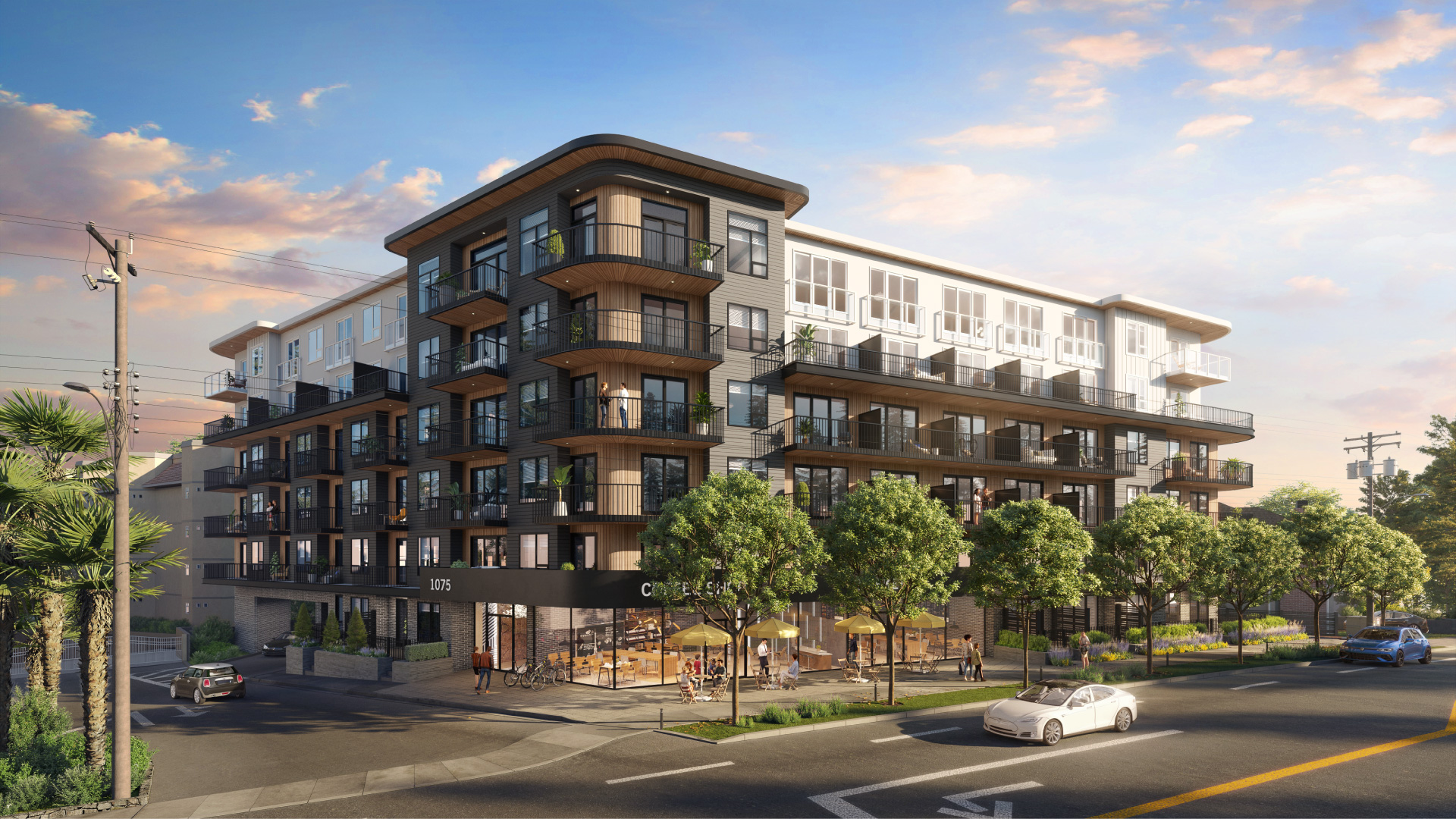
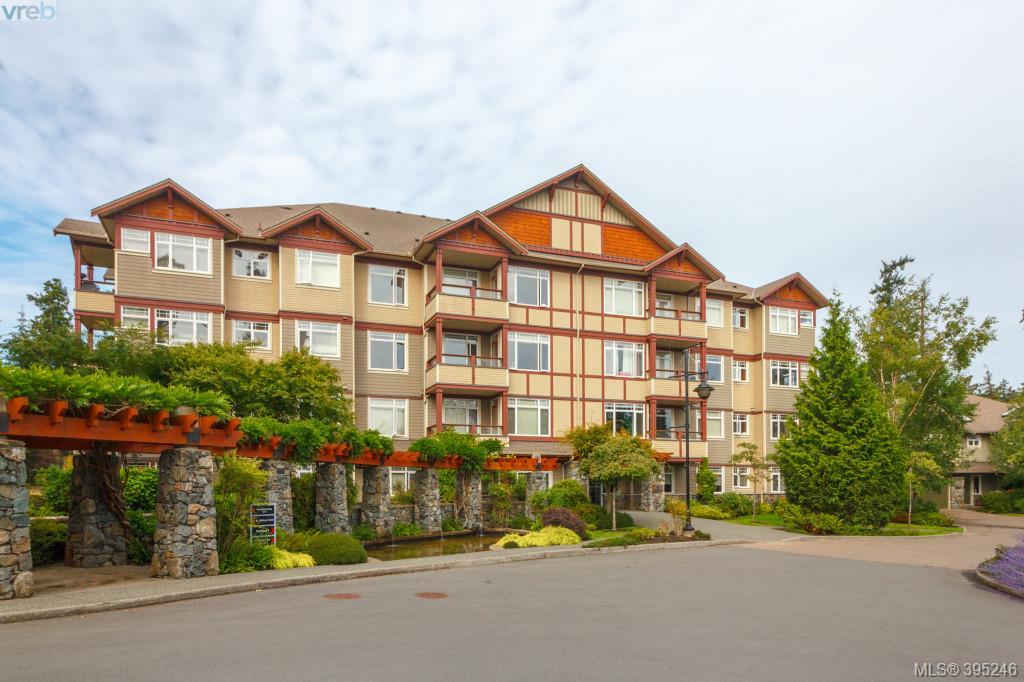
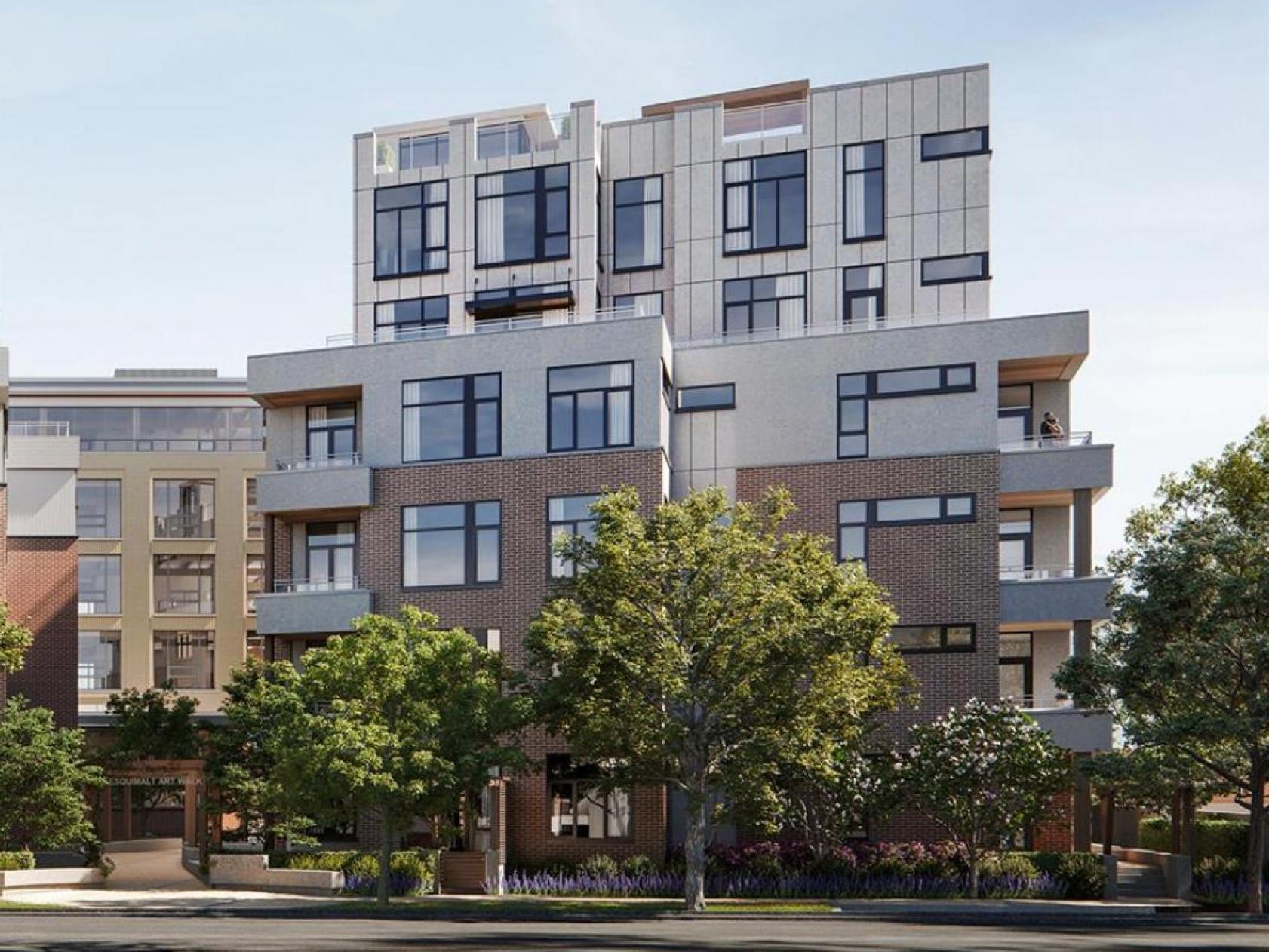
The Arbutus is the east condominium building at Esquimalt Town Square, the four-building civic centre Aragon Properties built beside Esquimalt Town Hall. Designed by D'Ambrosio Architecture + Urbanism, the six-storey wood-frame building holds 36 homes: one-, two- and three-bedroom plans plus a sub-penthouse and penthouse, from about 678 to 1,184 square feet, with 9'6" ceilings and in-suite laundry. Construction began in 2017 and residents moved in from June 2021.
Every home is heated and cooled geothermally, and every stall in the secure underground parkade has EV charging. Bike storage, ground-floor garden terraces and an art walk pathway link the building to the rest of the square: The Douglas condominiums to the west, The Spruce rental building, and The Mill, a five-storey mass-timber office building that houses the Esquimalt branch of the Greater Victoria Public Library. Red Barn Market, Country Grocer, the recreation centre and Saxe Point Park are within walking distance, and Esquimalt Road buses run frequently to downtown Victoria, CFB Esquimalt and UVic.
About Saxe Point
Saxe Point is the MLS sub-area at the south end of Esquimalt around Saxe Point Park, the forested headland at the end of Fraser Street with trails, beach access and views across Juan de Fuca Strait to the Olympic Mountains. Esquimalt describes Saxe Point and neighbouring Rockheights as its most attractive residential areas. Macaulay Point Park next door preserves the 1878 Fort Macaulay battery and a Garry oak meadow, Fleming Beach has the anglers' boat launch, and Buxton Green sits between them along the shore.
Housing is a mix of mid-century houses, apartment buildings from the 1960s and 1970s, many converted to strata, and newer condominium and townhouse projects, with a premium on the waterfront and water-view streets. CFB Esquimalt, the navy's Pacific base, is the township's largest employer and sits immediately west, and the Esquimalt Road shops, the recreation centre and Esquimalt Town Square are a short walk north. Esquimalt Road buses run to downtown, which is about four kilometres and ten minutes away by car or a short ride on the E&N Rail Trail.
About Esquimalt
Esquimalt is located in the heart of the Capital Regional District on the southern tip of Vancouver Island, just four kilometres west of the City of Victoria. Its name comes from the local First Nations expression “Es-whoy-malth,” meaning “the place of gradually shoaling water,” reflecting the area’s long connection to the sea. Incorporated in 1912, Esquimalt covers approximately 1006 hectares (2,485 acres) of land and water, and water continues to shape the community’s history, culture, and daily life.
The municipality is renowned for its strong naval heritage, serving as the home of Canada’s West Coast naval presence. The Royal Navy first used the area as early as 1837, and while the original townsite has been absorbed into the Canadian Forces Base, the base remains Esquimalt’s largest employer and a central part of community life.
Today, roughly 17,000 residents enjoy Esquimalt’s mix of established and vibrant neighborhoods. Families, young professionals, and retirees alike benefit from a variety of amenities, including scenic waterfront walkways, beautiful parks and beaches, modern recreational facilities, schools, library, and archives. The community also features a range of commercial services and locally owned shops, providing convenience while maintaining a small-town feel.
Residents of Esquimalt appreciate the combination of history, natural beauty, and community spirit. Waterfront trails, marinas, and beaches offer endless opportunities for outdoor recreation, from kayaking and sailing to jogging and picnics. The township’s proximity to Victoria allows for easy access to the city’s cultural, dining, and employment opportunities, while still offering a quieter, community-focused lifestyle. Although well-established, Esquimalt continues to support growth, with opportunities for new residential, commercial, and industrial developments that balance modern needs with the community’s historic character.